HAK PAr really does not like PKK!
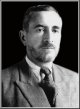
HAK-PAR deputy head Resit Deli speaks to TNA
'Ocalan has compromised with the state'
Nursun Erel
The New Anatolian/Ankara
'The PKK was almost finished, but Apo found a way to revitalize it'
'Most Kurds are fed up with Apo and the PKK, but they can't say so openly because they're intimidated'
'If PM Erdogan really wants to solve the issue, he has to listen to the Kurds'
'The best solution is a federal system'
Resit Deli is the deputy head of the Rights and Freedoms Party (HAK-PAR), which is under the legal threat of being banned. He was born in Siirt as a member of a well-known tribe of the area, the Solhan. Since his youth, he actively fought for the Kurdish issue on different platforms as a member of various Kurdish associations. As a result, he was jailed for three years in various prisons, for certain periods he lived his life illicitly, and he was forced to live in exile in Denizli for six months.
Deli recently took part in a Kurdish conference held at the French Parliament. He shared his views and his impressions of this meeting with TNA, along with thoughts on recent developments. Deli made a surprising allegation: "The terrorist Kurdistan Workers' Party (PKK) was almost finished, but PKK leader Abdullah Ocalan found a solution by compromising with the state." According to Deli, visits to Ocalan's Imrali prison cell by Turkish intelligence unit heads and Ocalan's wording when he accepted Turkish identity are signs of such a compromise. Here's what Deli had to say to us:
TNA: Recently you took part in the Kurdish conference held at the French Parliament. What issues were discussed there?
DELI: The topic was 'The Kurdish issue and the future of democracy in the Middle East'. There were a good number of attendees from Syria, Iraq, Iran and Turkey, so on behalf of HAK-PAR I was also there. We were trying to find an answer to the question of whether what the Iraqi Kurds have accomplished could be a good example for Turkey's Kurds. I also gave a speech there.
TNA: What did you say?
DELI: I mainly talked about developments in the Middle East which are crucial for the future of peace and stability in the area. But blocking any kind of peaceful and democratic solutions, the existence of the PKK is a crucial element and the main obstacle. We must first find a solution to this. In fact Turkey is really working very hard for its European Union membership target, but the deep state is against any kind of modernization. So the deep state in Turkey is ready to create obstacles to perpetuate the status quo.
TNA: I believe the PKK also had representatives in Paris. What was their reaction to this?
DELI: I think the conference program was created without the interference of the PKK, so they weren't there. None of the other speakers mentioned the name of the PKK either, so it was very interesting also for me. One other attendee was Sivan Perver (a very popular Kurdish singer in Europe), we were sitting side by side during the sessions. I asked him why he didn't ever come to Turkey to perform. I told him I thought this was prevented by the PKK, and he confirmed this.
TNA: So what were the conclusions of the conference?
DELI: Our closing declaration emphasized that stability and democracy in the Middle East depend on solving the Kurdish issue. There are Kurdish ethnic groups in Iran, Syria, Iraq and Turkey, so most of them were represented there and most of the speakers emphasized federalism as a solution. But Turkey's territorial unity was especially emphasized in the declaration, even though there were some other opinions.
Most of the attendees' attitudes towards the U.S. presence in Iraq were positive. At least they're openly speaking about their intentions and they ask us to understand the Kurds. This is really crucial for Kurds, to be understood. Because the Kurdish people are perhaps the most victimized people in the world. There is nothing like it in the world. For centuries we suffered, we number about 40 million people but we're scattered in different parts of the region. Our existence was denied until recently. There isn't one centimeter of soil here we haven't spilled our blood on. We're judged, tortured and killed. So the United States of America at least declares its position for a concrete solution, that's why we approve of it (being in Iraq) too.
TNA: After this meeting various Kurdish representatives came together in Diyarbakir. What was the aim of that gathering?
DELI: Our aim was bringing the Kurds together to discuss the future of the issues. In fact, Prime Minister Recep Tayyip Erdogan was very pragmatic in naming the issue in Diyarbakir (in summer 2005). And he also said the state must judge itself too. In a way we wanted to evaluate the aftermath of this declaration and wanted to encourage him. Most of the attendees conceded that this was a very positive development and should be backed by the Kurds. We all believe that such an approach will ease the problem being solved. Because even if there weren't any further steps, it is a radical break from previous governments.
TNA: In what way?
DELI: Because Kemalist ideology has dominated Turkey for the last 80 years. And its intention was along these lines: There are only Turks here, there's no any ethnic diversity. They even tried to establish their own Kurdish leverage and this way tried to perpetuate the status quo. In fact this is a kind of a devil's triangle.
TNA: What are the points of this triangle?
Devil's triangle
DELI: The deep state, Kemalist ideology and for the last 20 years, the PKK.
TNA: It must be scary for a Kurd to speak against the PKK.
DELI: For the last 30 years I'm used to checking behind myself every 10 steps, so I'm scared. But someone has to tell the truth. The main problem in Turkey is the deep state. Especially in recent years the alliance between the deep state and the PKK made living harder for the Kurds. In fact Kurds have serious problems with the PKK and without breaking their ties with them the problem can't ever be solved. Kurds solved their problem with the Turkish state, but couldn't solve it with the PKK. But it isn't easy for them to protest openly.
TNA: What are the consequences if they do?
DELI: They're afraid of being seen as traitors, but if they act together with the PKK, they can be seen as heroes. One other reason is this, they weren't ever genuinely protected by the Turkish state. State officials were never just and true towards the Kurds. One other reason is that the policies of the PKK have no norms or principles. A few months ago they murdered Hikmet Fidan (Democratic People's Party,
DEHAP, deputy believed to be murdered in Diyarbakir by the PKK after he broke his ties with it and criticized fighting for the Kurdish issue through arms), who had worked with them for 25 years. He was invited by his longtime friend to somewhere and executed there. Do you need to hear more reasons?
TNA: Do you mean there's no alternative in Turkey for Kurds than to act without the PKK?
DELI: In Turkey there are two choices for Kurds: compromise with state forces or with the PKK. There's no other way. I'm a member of the Solhan (well-known tribe in the Siirt area). In our family there are 50,000 people. Once we used to live in our motherland, which is somewhere between Siirt and Bitlis. But after the '90s we had to leave the area because state forces ordered it. During the 1992 general elections we wanted to support an independent candidate, but all the government forces told us openly to support Zubeyr Aydar because he was the compromise candidate of state forces and the PKK. Because of such pressures we left the area. I'm saying that the PKK was established by some dark state forces who were also enemies of the Kurds.
The PKK's principle
TNA: If this is true, why don't more people know about it?
DELI: The PKK follows the principle of, "If someone leaves the cause, kill him." So if someone has any attachment to them, there's no chance of leaving. So there's simply no chance of a life after the PKK. Most ex-PKK members are either informants or just stay at home or have been killed. So everyone lives in fear of the PKK. In fact most Kurds aren't happy with the PKK but they prefer not to say so openly. For example in the new party (the Democratic Society Party, DTP), most of the members were against the co-chair system, but it's a pity that none of them could say it. Everyone has to keep their mouths shut. Even (DTP co-chair) Ahmet Turk couldn't balk at this. Because the order came from Imrali, Abdullah Ocalan ordered this system.
TNA: How do you see the chances of this new party?
DELI: Recently the PKK was in turmoil. Especially after Hikmet Fidan's murder, the different views between two brothers (meaning Abdullah Ocalan and his free brother Osman Ocalan) grew sharper. The PKK fell apart defending the Kurdish issue. All these developments caused an uproar among even members of the PKK. So in fact Abdullah Ocalan was trying to curb these developments. In a way he tried to do this by establishing such a formula in the DTP. In fact Ahmet Turk is a respected name amongst the Kurds, but Ocalan tries to control him, forcing to cooperate with Aysel Tugluk (Ocalan's ex-lawyer and current DTP co-chair).
TNA: One recent noteworthy event was the visit of the National Intelligence Organization (MIT) heads to Imrali, at the same time Ocalan said that he was accepting Turkish identity. Is this a sign of a compromise between Imrali and the Turkish state units?
DELI: In fact Kurds have a problem with this system, with Kemalist ideology, the Republican People's Party (CHP) and the so-called socialist parties. This is almost a vendetta for Kurds. The Dersim (a Kurdish revolt suppressed in 1938, resulting in thousands of deaths) was designed by Kemalists, and Sheikh Said (Kurdish leader executed in 1925 with 47 others in Diyarbakir) was executed by them. Can you ever imagine a Jew speaking in favor of Hitler? So Abdullah Ocalan has an aim to cooperate with the Erdogan government.
TNA: Why do you think that?
DELI: He wants to avoid a federal solution for the Kurds. Once Apo (Ocalan) says that he accepts Turkish identity, that means he is accepting all the assimilation policies. Also the MIT heads' visits are noteworthy. Whenever the PKK has a problem, some people appear to rescue them. Three recent events are important: One, the murder of Hikmet Fidan. He was killed by the deep state and the PKK working together, and this was meant as intimidation of the Kurds. Secondly, afterwards we saw the Semdinli case. And thirdly, the last stage was the DTP's establishment with the co-chairmanship model. Between those events, Ocalan's messages were spread as if he had compromised with the state.
Deep state-PKK cooperation
TNA: Do you really believe some state circles are really in cooperation with the PKK?
DELI: Almost everybody in Turkey seems to be in cooperation with them. Especially the Turkish press and media. For years and years we were trying to bring a different voice to the agenda but we were never welcomed by the Turkish press. Only the PKK approach was spread by them. In fact this was very much supported by state circles. The Kurds were put in the same basket as the PKK, and this way a prejudice was easily created against the Kurds.
TNA: You're the deputy head of a political party now. Wouldn't it help to express your views in a better way to the public?
DELI: Personally I always supported alternative policies in accordance with the Kurdish issue. Just to give a chance to those policies we established a political party with Serafettin Elci (Kurdish politician), but it was banned only 45 days later. In fact Abdullah Ocalan's coming back to Turkey is a trap; we believe that this is a kind of revitalization of Lausanne (the 1923 treaty). This is a trap for Kurds. That's why we established HAK-PAR with Melik Firat and some of our colleagues. Our aim was paving the way for different views on the issue. We also wanted to wipe away the idea that Kurds and the PKK are equivalent.
TNA: What needs to be changed to reach a solution?
DELI: First, the primary approach of one state, one flag, one religion, one people must be changed. We believe that a federal system would be an excellent solution. And getting rid of all the remnants of the deep state is crucial.
TNA: According to many observers, 2006 is the year for early general elections. How do you see HAK-PAR's chances?
DELI: Realistically, neither the DTP nor HAKPAR can overcome the 10 percent threshold. But first we must see the conditions, if some circles continue to force policies to make sure there are no Kurds in the next Parliament. Nothing's clear yet, but we aren't close to alliances in the elections. If a just and fair alliance proposal comes our way, we may accept it.
But I have a word here for Recep Tayyip Erdogan: If he is sincerely seeking a solution, he must consider talking to us 20 million Kurds. Only 2 million of them have sympathy for Ocalan, but the rest think quite differently. The prime minister can easily provide for one of the (state-owned Turkish Radio and Television Corporation) TRT channels to broadcast in Kurdish. He can easily make a decision to start Kurdish education next year. But first he must listen to the genuine voice of the Kurds. But despite our all efforts up to now we haven't been able to get an appointment with him. Three times we applied officially, and once we used a person close to him but it didn't happen. Let's hope things get better this coming year.



 I hope PKK creates brotherly unity with Turks.. tjeez..